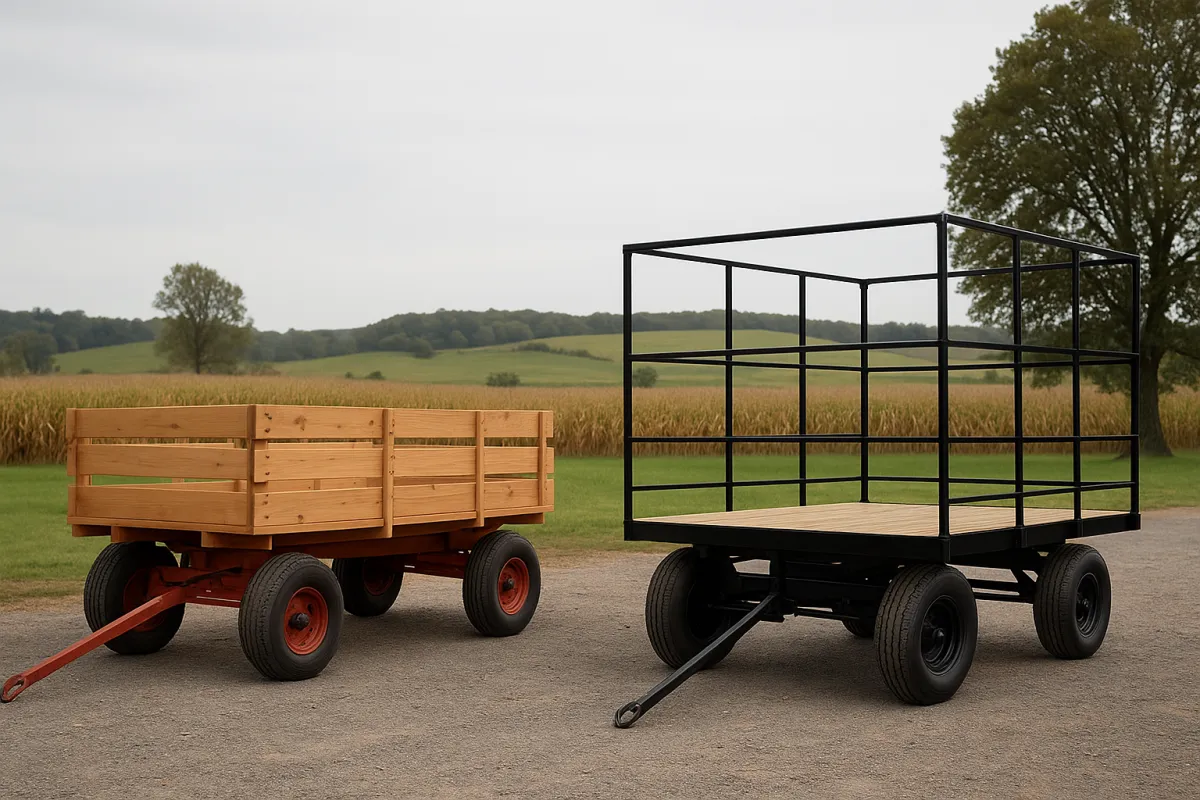
Comparing Wooden vs. Steel-Frame Wagons: Which Fits Your Farm Needs?
Choosing the right wagon frame material—wood or steel—has a direct impact on your farm’s efficiency, maintenance workload, and overall durability. Both materials offer advantages depending on the type of work your farm handles, the terrain you operate in, and how frequently the wagon is used. Understanding how each frame performs helps you select a wagon that supports your daily operations and long-term needs.
What Frame Material Means for Farm Performance
A wagon’s frame determines its backbone strength, flexibility, and longevity. Wooden frames tend to offer natural shock absorption and traditional styling, while steel frames deliver higher strength and load capacity. Each material affects how the wagon handles weight, weather, and repeated use.
Key Differences Between Wooden and Steel Frames
Because this topic compares two clear options, the subsections below break down the defining characteristics of each frame material. These explanations help highlight when one may be more suitable than the other.
Wooden Frames
Wooden frames provide a classic look and natural flexibility. Their slight give helps reduce jolting on uneven ground, making them ideal for hayrides or lighter farm use. Repairs are generally simpler, as damaged boards can often be replaced individually.
Steel Frames
Steel frames offer superior strength and durability, especially for heavy hauling. Steel resists bending under larger loads and holds up well under frequent daily use. While repairs may require welding or professional service, steel frames typically last longer under consistent workload.
How to Choose Between Wood and Steel
Selecting the right frame material becomes easier when you follow a clear decision-making process. The steps below guide you through the considerations that matter most for farm use.
Determine the main purpose of the wagon—passenger hayrides, heavy hauling, mixed use, or daily transport.
Evaluate your terrain, paying attention to slopes, soft ground, and uneven surfaces.
Consider your typical load weight throughout the year.
Factor in how often the wagon is used and how quickly you need repairs to be completed.
Compare long-term maintenance expectations for each material.
Decide whether appearance or durability matters more for your intended use.
Functional Pros and Cons to Consider
Before making a final choice, it helps to evaluate additional factors that influence how each frame performs. The list below outlines practical points that help clarify what each material offers.
Wooden frames offer natural shock absorption.
Steel frames handle heavier, daily workloads more effectively.
Wooden repairs are easier for farms that prefer do-it-yourself fixes.
Steel requires less frequent replacement of structural components.
Wooden frames may show weathering faster without proper care.
Steel frames are less affected by temperature shifts and seasonal moisture.
FAQs
Does a wooden frame limit how much weight the wagon can carry?
Yes. While wooden frames are sturdy, they cannot handle the same heavy loads steel frames can manage on a daily basis.
Are steel frames harder to maintain?
Not necessarily. While steel repairs sometimes require welding, the material itself typically needs less frequent upkeep than wood.
Do wooden frames perform better for passenger hayrides?
They often do. Wood’s natural flexibility can create a smoother ride, making it more comfortable for guests during long tours.
Is weight a factor when comparing the two materials?
Yes. Steel frames are heavier, which improves stability for hauling but may require more power from your tractor depending on the load.
Which frame lasts longer overall?
Steel generally offers a longer lifespan under heavy or frequent use, while wooden frames can last many years with proper maintenance and care.
Conclusion
Both wooden and steel-frame wagons serve valuable roles on the farm, but the ideal choice depends on your workload, terrain, and long-term expectations. Wooden frames offer comfort, tradition, and ease of repair, while steel frames deliver strength, durability, and reliability under daily use. By evaluating your needs and understanding how each frame behaves under real working conditions, you can select a wagon that enhances your farm’s efficiency and supports your operation year after year.
