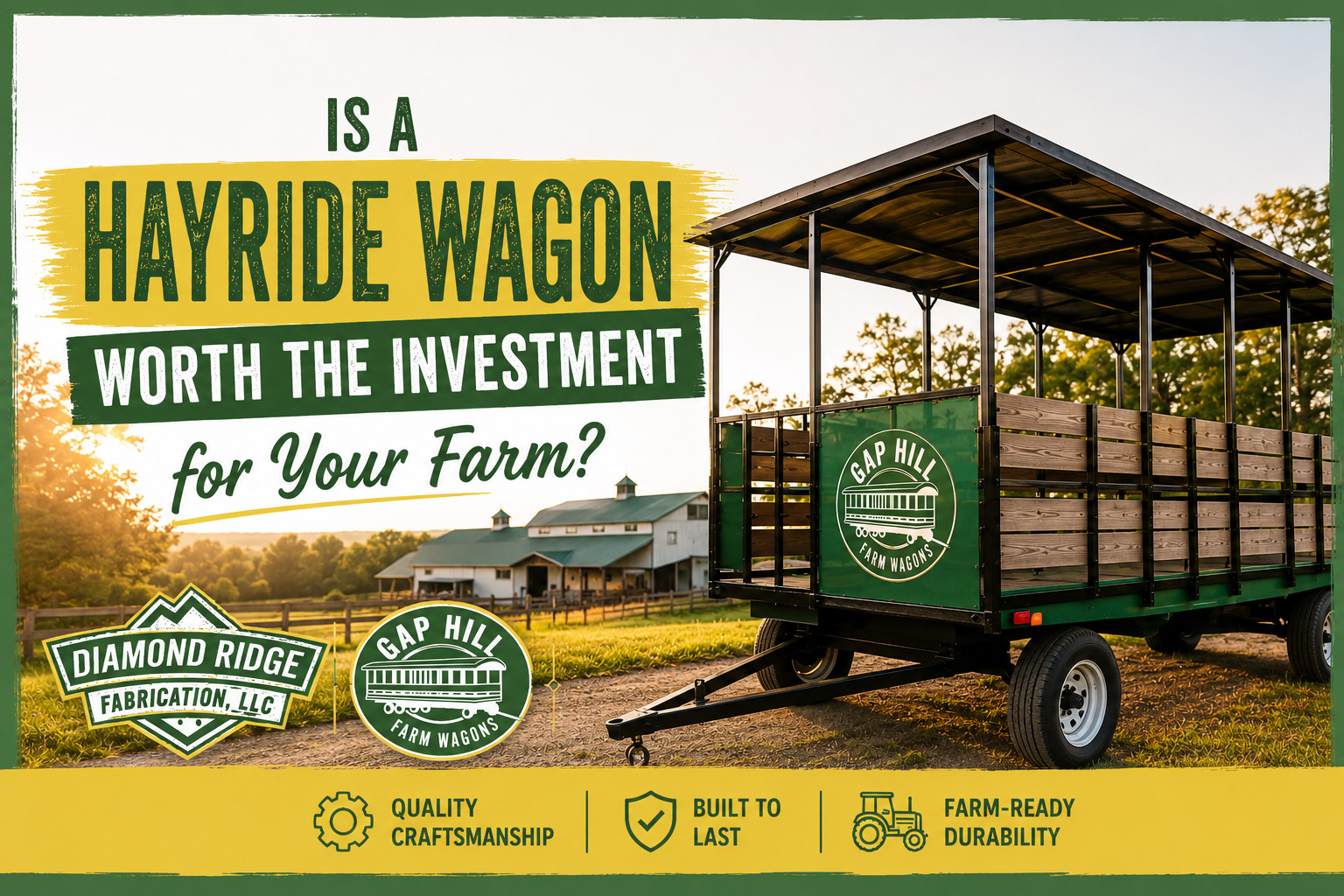
Is a Hayride Wagon Worth the Investment for Your Farm?
Every piece of farm equipment requires a cost-benefit calculation, and a hayride wagon is no different. Unlike a tractor or irrigation system, a hayride wagon sits at the intersection of farm utility and visitor experience, which makes the ROI conversation more nuanced than most equipment purchases. Whether you run a working farm, a pick-your-own operation, or a seasonal agritourism destination, this guide will help you think through whether a hayride wagon makes financial sense for your specific situation.
The Two Ways a Hayride Wagon Generates Value
Most farm equipment earns its keep by doing one thing well. A hayride wagon can earn its keep in two distinct ways: as a revenue-generating attraction and as a functional work tool. Understanding both sides of the value equation is the key to knowing whether it is a worthwhile investment for your operation.
Revenue Through Agritourism and Events
Farms across Gap, Pennsylvania and the broader Lancaster County region have turned seasonal hayrides into meaningful income streams. Charging $8 to $15 per person for a guided hayride during fall harvest season, a farm running two rides per day on weekends over six weeks can generate $10,000 to $20,000 in direct ticket revenue from the wagon alone. Add in the secondary spending that comes with bringing visitors onto your property, concessions, pumpkin sales, photo experiences, and the economics get even more compelling.
Even smaller operations in Gap, Pennsylvania that run a single wagon for private group bookings, church outings, or school field trips report that one or two bookings per weekend through the season can cover annual maintenance costs and then some. The key is treating the wagon as a revenue asset and pricing accordingly.
Utility Value for Working Farms
If agritourism is not part of your model, a hayride wagon still earns its place as a utility vehicle. Hauling hay bales, moving feed, transporting workers and equipment across large properties, and supporting harvest operations are all legitimate use cases for a well-built farm wagon. The more versatile the wagon design, the more ways it can offset costs through daily operational use.
What to Consider Before You Buy
Before committing to a purchase, honest answers to the following questions will sharpen your investment case. Each one affects whether the wagon pays for itself and how quickly.
How Many Paying Guests Can You Realistically Attract?
A 20-passenger wagon that runs half-full every weekend is still a solid performer. Do a realistic assessment of your existing foot traffic, your marketing reach, and the seasonal demand in your area. Farms near tourist corridors in Gap, Pennsylvania and Lancaster County generally have built-in demand. Farms in more rural or isolated locations may need to invest in marketing before the wagon pays for itself.
What Are Your Insurance and Liability Requirements?
Carrying passengers on a farm wagon requires appropriate liability coverage. Contact your insurance provider before purchasing to understand what additional coverage you will need and what it costs annually. In most cases this is manageable, but it is a real line item that affects your ROI calculation.
How Long Will the Wagon Last?
A quality Amish-built wagon from a reputable builder in Gap, Pennsylvania is built to last 20 or more years with proper maintenance. Spreading a $10,000 purchase price over 20 years of service brings your annualized cost to $500, not counting any revenue the wagon generates. That math makes the investment case considerably easier to defend.
A Simple Return on Investment Example
Here is a straightforward scenario to illustrate the potential return. Assume a 20-passenger wagon purchased for $9,000, running hayrides at $10 per person on fall weekends.
Even at the conservative end, a well-run operation breaks even on the wagon cost within five to seven seasons from ticket revenue alone, without counting any utility value during the rest of the year.
Frequently Asked Questions
Do I need a special license or permit to carry passengers on a farm wagon?
Requirements vary by state and county. In Pennsylvania, farm operations often have specific exemptions, but you should consult with a local agricultural attorney or your county extension office to confirm what applies to your situation.
Can one wagon serve both passenger and hauling duties, or do I need two?
Many farms use a single versatile wagon for both purposes, switching between configurations as needed. Custom-built wagons can be designed with this dual-use intent from the start, which is worth discussing with your builder.
What happens to the wagon investment if I sell the farm?
A quality farm wagon is a tangible asset that transfers with the property or can be sold separately. Well-maintained wagons from reputable builders hold their value reasonably well on the used market.
Is the hayride season long enough to justify the purchase?
Hayride season is typically September through November, but many farms extend use through Christmas tree operations, spring tours, and summer farm camps. The longer you can put the wagon to work, the faster it pays for itself.
What ongoing costs should I budget for after buying a wagon?
Annual costs typically include minor maintenance like wood sealing or touch-up painting, tire and wheel inspections, and any seasonal hardware adjustments. A well-built wagon should not require significant repairs for many years if properly maintained.
Conclusion
For farms with any agritourism component, a hayride wagon is not just a piece of equipment, it is a guest experience that drives revenue and repeat visits. Even for strictly working farms, the utility value of a durable, well-built wagon adds up over time. Gap Hill Farm Wagons has helped farmers across Gap, Pennsylvania and beyond make smart wagon investments since 1991. If you want to talk through whether a wagon makes sense for your specific operation, call (717) 442-1097 or reach out for a free consultation.
