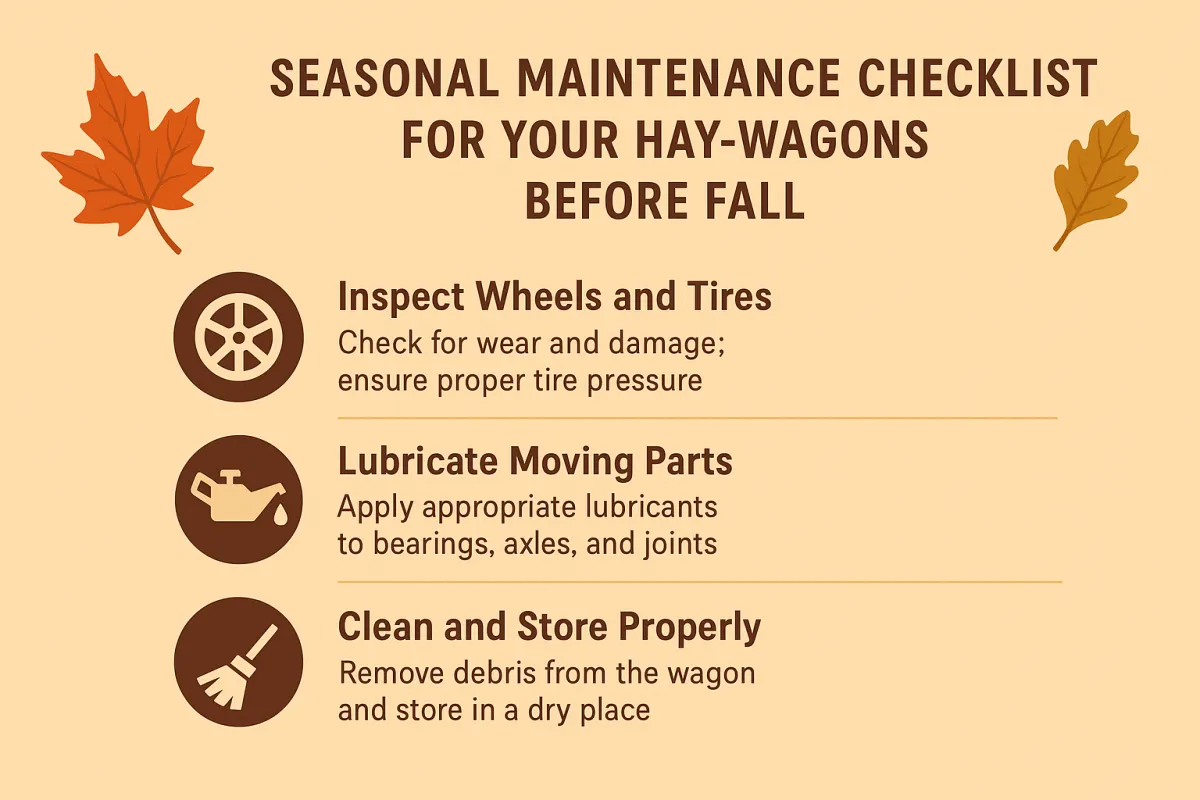
Seasonal Maintenance Checklist for Your Hay Wagons Before Fall
As fall approaches, hay wagons experience heavier use for harvesting, hauling, and seasonal activities. Because cooler temperatures and shifting soil conditions can stress wagon components, inspecting and preparing your equipment ensures it performs reliably through the busiest months. Proper maintenance reduces downtime and extends the wagon’s lifespan.
How Seasonal Changes Affect Hay Wagon Performance
Seasonal weather transitions bring moisture, softer ground, and colder nights. These shifts increase wear on wooden boards, metal frames, wheels, and axles. Addressing these vulnerabilities before fall prevents problems from showing up when the wagon is already in use.
Critical Components to Inspect
This topic involves several major wagon areas, so the following subsections highlight the components that are most affected by seasonal conditions.
Wagon Deck and Side Rails
Colder temperatures and moisture can expose loose boards, weakened joints, and splinters, making the deck less stable for workers or loads.
Wheel System
Tires, bolts, hubs, and rims need closer inspection as heavier fall workloads and softer soil can strain them more than during summer.
Axles and Suspension
Axles take on increased stress during hauling season, so rust, bending, or loosened hardware must be addressed early.
Hitch Assembly
A hitch that is misaligned or worn can cause unstable towing, especially when the wagon is loaded unevenly or traveling over soft ground.
Step-by-Step Fall Maintenance Checklist
A clear process helps ensure every part of the wagon is evaluated correctly. The following checklist outlines the essential steps.
Examine all deck boards for cracks, softness, or movement.
Tighten or replace rails, bolts, and floor fasteners as needed.
Check tire pressure and inspect tread depth for signs of wear.
Spin each wheel to check for bearing noise or grinding.
Inspect axles for bending, rusting, or loose mounting plates.
Apply grease to hubs, joints, hinges, and pivot points.
Test the hitch pin, latch, and draw assembly for secure locking.
Pull the wagon a short distance under light load to test stability.
Clean off dried mud, debris, and moisture-retaining buildup.
Review last year’s maintenance notes and resolve recurring issues.
Signs Your Wagon Isn’t Fall-Ready Yet
Some problems are subtle and may not appear during quick inspections. The list below identifies warning signs that a wagon still needs attention.
A noticeable lean or tilt when sitting unloaded
Unusual sounds such as squeaking, rubbing, or grinding
Loose rails or corners that shift when pressure is applied
Tires losing air faster than usual
Damp or musty odors coming from wooden boards
FAQs
What month should fall maintenance ideally begin?
Late summer is typically the best time, giving you enough flexibility to complete repairs before the season starts.
Should wooden decks be sealed before fall?
Yes. A protective coat helps prevent moisture absorption, which reduces warping and softening during cooler months.
Does storing a wagon on wet soil cause damage?
Yes. Long-term exposure to wet ground accelerates rust on the undercarriage and weakens wheel components.
Why do tires lose pressure faster in fall?
Dropping temperatures naturally reduce air pressure inside tires, making more frequent checks necessary.
Is it recommended to update old hardware even if it still works?
If hardware is aging, rusting, or loosening frequently, replacing it before fall prevents on-season breakdowns.
Conclusion
Preparing your hay wagons before fall is a practical way to ensure reliable performance throughout the season. A well-maintained wagon handles heavier loads, adapts to softer ground conditions, and supports the demands of harvesting and hauling. By inspecting each key component and addressing minor issues early, your equipment remains dependable during the busiest time of year.
