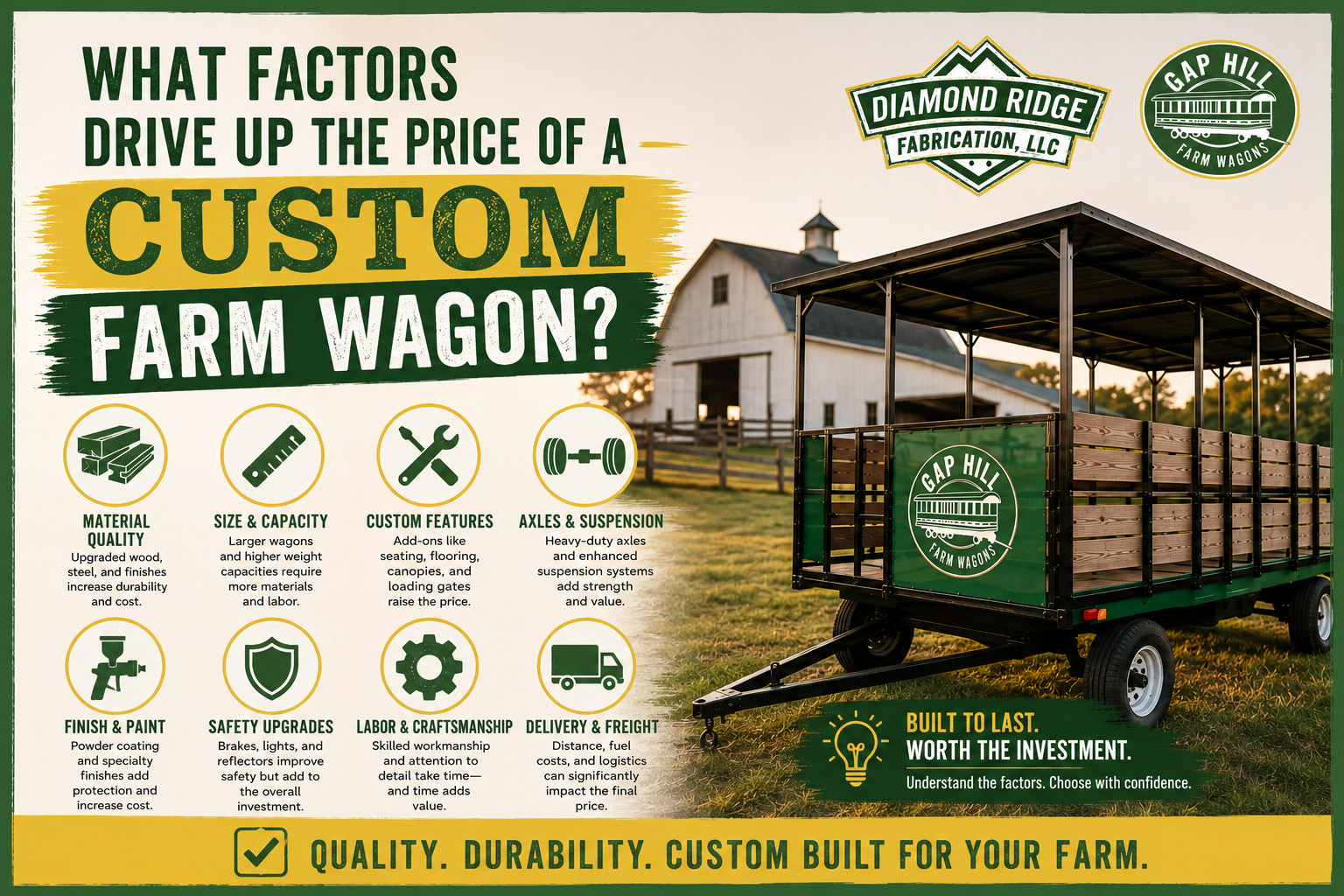
What Factors Drive Up the Price of a Custom Farm Wagon?
You asked for a quote on a custom farm wagon, and the number came back higher than you expected. Now you are wondering what is actually driving that price and whether it is justified. This is one of the most common questions buyers bring to wagon builders in Gap, Pennsylvania, and the answer is more nuanced than most people expect. Price is not arbitrary, and understanding what goes into it will help you decide where to invest and where to trim without sacrificing what matters most.
Why Custom Wagon Pricing Is Not One-Size-Fits-All
A custom farm wagon is priced based on the specific combination of size, materials, features, and labor required to build exactly what you ordered. Change any one of those variables and the price changes with it. This is different from buying a product off a shelf where the cost is fixed regardless of how it fits your situation. The flexibility that makes custom wagons valuable is also what makes their pricing dynamic.
The Biggest Price Drivers in a Custom Wagon Build
Several factors consistently account for the largest portion of cost in a custom wagon build. Here is what each one contributes and why.
Wagon Length and Width
Every additional foot of wagon length requires more steel for the frame, more lumber for the deck and railings, and more labor to cut, fit, and weld everything together. A 20-foot wagon does not simply cost twice as much as a 10-foot wagon, but the relationship between size and cost is real and significant. Width matters too. Wider wagons require wider axles, which are more expensive and heavier, and they need stronger cross-bracing to prevent flex under load. Buyers in Gap, Pennsylvania who want the most wagon for their budget often find that narrowing their length requirement by two or four feet can meaningfully reduce cost without sacrificing capacity.
Steel Grade and Frame Specification
The structural steel used in the frame is one of the highest-cost materials in any wagon build. Heavier gauge steel and stronger profile shapes, like wide-flange beams versus square tubing, cost more per foot and require more powerful equipment to weld. For wagons that will carry passengers or heavy loads, these specifications are not optional; they are safety requirements. For lighter utility wagons, there may be room to spec a lighter frame without compromising function.
Decking Material and Surface Treatment
Hardwood decking costs more than softwood but resists wear and weathering far better over time. Pressure-treated lumber adds cost but extends the life of the deck significantly in outdoor conditions. Some buyers in Gap, Pennsylvania opt for a treated softwood deck to reduce upfront cost, while others specify white oak or a similar hardwood for longevity. The surface treatment, including sealers, stains, or paint, also adds to cost and affects how the wagon weathers across seasons.
Seating Configuration and Passenger Safety Features
Center benches, perimeter seating, padded seats, seat backs, and safety railings are all line items in a custom build. Each one adds material and labor cost. Safety-specific features like latching entry gates, step systems, and interior grab bars are particularly important for passenger wagons and should not be cut to save money. These features affect both rider safety and your liability exposure.
Weather Protection Systems
Hoop-and-tarp systems that provide rain and sun coverage for passengers are a significant add-on cost but dramatically extend the usable season and booking potential of a hayride wagon. A well-designed tarp system built into the wagon structure from the start costs less than retrofitting one later. Buyers planning to run hayrides in variable weather should build this into the original specification rather than treating it as a future upgrade.
Paint, Finish, and Branding
A basic primer coat is inexpensive. A full custom paint job in specific colors with multiple coats, proper prep, and a protective topcoat adds meaningful cost. Farms in Gap, Pennsylvania that want their wagon to match branded colors or carry their farm name will typically see a few hundred to over a thousand dollars added to the base price depending on complexity.
Where You Can Save Without Sacrificing Quality
Not every cost driver is non-negotiable. The following adjustments can reduce total cost without compromising safety or long-term durability.
Frequently Asked Questions
Does the axle type significantly affect price?
Yes. Heavy-duty axles rated for higher load capacities cost considerably more than standard axles. If you are buying a wagon primarily for light passenger use rather than heavy hauling, a standard axle may be appropriate and more affordable.
Does ordering during the off-season affect pricing?
Some builders offer winter build slots at better pricing to maintain shop throughput during slow months. It is worth asking whether your timing affects the quote.
Is there a price difference between different entrance configurations?
Yes. Simple end-access designs are cheaper to build than mid-wagon entry gates with safety latches, drop-down ramps, or accessibility accommodations. Define your entry needs before requesting a quote.
Does the tongue and hitch setup affect cost significantly?
Specialized hitch configurations for specific tractor models or non-standard drawbar heights can add cost. If your equipment has standard dimensions, this is typically not a major factor.
Can I add features after the wagon is built without paying a large premium?
Some additions, like painting or tarp installation, can be done post-build. Structural additions like extending the frame or widening the deck are much more expensive after the fact. Build in what you need from the start whenever possible.
Conclusion
Price in a custom wagon build is a direct reflection of what you are getting, and understanding the drivers helps you make smarter tradeoffs. The goal is not to get the cheapest wagon; it is to get the most value for your specific needs. Gap Hill Farm Wagons has been helping buyers in Gap, Pennsylvania navigate these decisions since 1991, and they know how to build wagons that hit the right balance of performance and cost. Call (717) 442-1097 or request a free quote to start the conversation.
